The Design of Things

human endeavor + the natural world

Good.

Fermob

I think it would change the world if we reintroduced “good” to our vocabulary. As in, my good coat, my good purse. A good sweater. Good in this sense implies well made, worth taking care of, exceptionally designed, will last a long time.

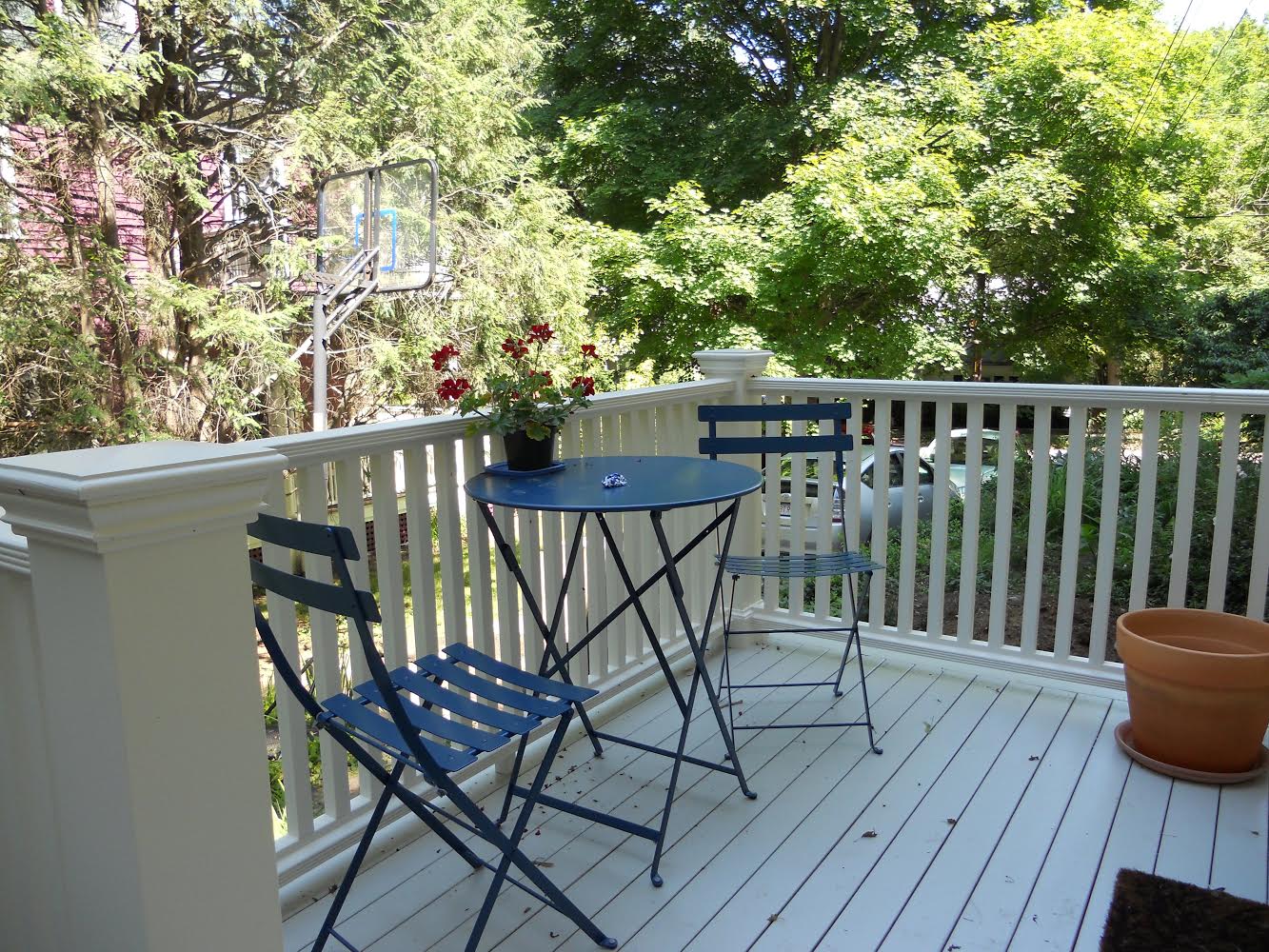
We could stand to make a few more purchases that will last – both materially and stylistically, the intersection where excellent design resides. (But not last to eternity, like a Fisher Price plastic castle in a landfill or water bottles in the ocean.) I realized that I found this combination in our patio furniture, made by the French company Fermob. I bought a small cafe set after we redid this porch and painted our house – it was featured in a shop in town but cost more than I’d planned to spend.

It was so pretty I started rationalizing right away. The set was more expensive than what I could find somewhere like Target – not so expensive as to be “luxury” but not so cheap that it would fall apart in a few years. It was made in France, not China, which means a lower carbon footprint because it’s shipped a shorter distance and is made in a country that is reducing its greenhouse gas emissions. And best of all, that gorgeous color was guaranteed to hold through every season, for years.

WorkingFermob

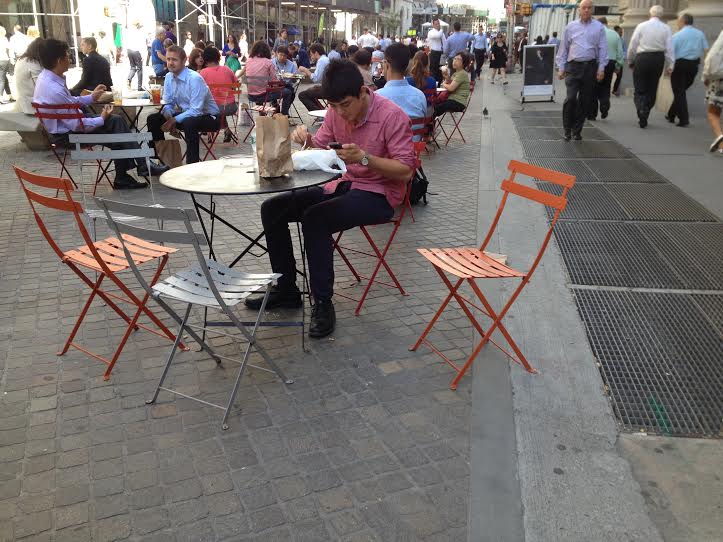
I put in the order. A few weeks later, I happened to go to New York and saw hundreds of chairs and tables like mine out in Bryant Park. Sure enough, Fermob. Putting furniture outside for public use in New York
is like asking an elephant to step on a Timex. (Imagine what would happen if I put my West Elm foyer sofas in a hotel lobby for a week.)

I thought about what makes them such good design. They’re made of steel, but don’t use a lot of it. The graceful swoop of the chairs makes them pretty and also surprisingly comfortable though they are quite light and foldable. They come in dozens of other colors and chic, retro-inspired but fresh styles, including those with cushions and arms.

Fermob’s website features a section on production and “eco-design.” They point out that steel is nearly universally recycled, their colors are UV-protected so they won’t fade, and they use solvent-free paints and upholstery. As we all become more budget-conscious, climate-conscious, and overwhelmed by clutter, good design should incorporate all these considerations. I think our sensibilities may be swinging back that way – I hope more companies will find it important to make products that meet us there.

My Fermob set is now my “good” cafe set. I love it every time I look out the window, or pass by with my groceries, or sit down for lunch or a glass of wine. I’ll love it for years, probably decades, to come.
FermobInUse

in my own backyard

Bat

I’m in a science book club. I’m the only non-scientist. There are three ecologists, an ornithologist, two biologists, and a physicist. (They all walked into a bar…) They named it Dangerous and Wondrous Science (DAWS) and our instruction is to choose books that offered “dangerous” – table-upending – ideas that also transmit the wonder of the world to readers. We started with the Origin of Species.

One of my persistent worries is about the state of the natural world. I’m not helped right now by our current book selection, The Sixth Extinction, by New Yorker writer Elizabeth Kolbert. You can imagine what it’s about. Things are not looking good. So far, the book is wondrous in the sheer magnitude of what it presents – it’s kind of mind-blowing to get the sense of the vastness of geologic time, time that contains entire previously populated Earths (ending in various types of apocalypse) that look nothing like this one. Or, get this, the idea that extinctions might occur in “periodic bursts” having to do with “the passage of the solar system through the spiral arms of the Milky Way,” as two scientists surmised in 1984 (later debunked.) Or even just the idea that humans are the only species that can and do go everywhere – one effect of which is tramping fungi around that are killing off the world’s amphibians.

It’s freaking me out.

I fret that modern people are not connected to the natural world and so will speed the rate of destroying it. Then I looked at how I spend my days. I hurry through, intent on work and to-dos and do not take the time to notice that much.

Today was warm for October. (Let’s not even get into that.) The garden looks tousled and beautiful in that fading autumnal way. When I was finished working, I took my laptop and yoga mat and set out to do stretches in the backyard along with “My Friend Maia,” to enjoy things just as they are right now. I also took our terrier out, because he, too, needs some time just hanging outside, rather than being hurried down the sidewalk twice a day by preoccupied and impatient me.

It was already getting dark, and the leaves on the trees looked even more orange against the cloudy sky. I started the stretches, tried to enjoy. (“Have some pleasure!” said Mrs. Soprano to Tony.) A little bird flitted around in circles overhead. Only it was a bat. Winging around in that batty way, as if its wings were pulled by strings. He circled and circled and then disappeared.

Aren’t they going extinct too? Aren’t they afflicted by a mysterious fungus also? He was gone for a good ten minutes, and then he came back. Then he left again. And then he came back. And then he came back.

To Go

kkt080-klean-kanteen-16oz-stainless-steel-pint-cup

One of my guilty pleasures is to buy hot coffee or iced tea out in the world. A dog walk is an opportunity to go by a café. Errand running, another chance to just stop by Dunkin’ Donuts. Waking up in the morning: a chance to figure out where and when I will be forced to buy a caffeinated drink.

What really makes me feel guilty about it is the paper and plastic waste I am generating. The paper cup, the plastic lid, the cardboard sleeve I take, the plastic cup, the straw…. It’s all bad, even if it goes in the recycling after spending some time on the floor of my car.

I hate buying a thing to solve a problem. For awhile I pretended to myself that I would cut this habit and make most of my coffee and tea at home. But I am addicted to the experience of someone else making it and of carrying it around in an adult’s sippy cup.

I started looking at reusable containers. The huge plastic cold drink containers at Dunkin’s seemed even more environmentally egregious and are just plain ugly. The reusable coffee mugs have annoying (to me) handles and are either made of plastic or have a dark cavernous inside that would never get cleaned. The ceramic cup with silicon lids are gorgeous but a.) bound to get broken and b.) isn’t silicon a bad-mining thing?

When I stopped looking, I found Kleen Kanteen’s steel pint at the grocery store, lid sold separately. The steel conveys that industrial chic while camping thing. The lid contains a small amount of silicon and of course hard plastic. The entire thing is “responsibly sourced” which means, at least, somebody thought about whether it created emissions or eroded mountain gorilla habitat or some other bad something.

For me, I think it will last a long time, I’ll like it which means I’ll remember to use it, and it won’t get too gross (which goes back to liking it enough that I’ll remember to use it.)

It was expensive. Ten dollars for the cup and seven for the lid (as if you would buy a sippy cup without a lid).

The guy who rang me up was Somali. He looked at it and said, “This is cool. We had these for our cups at home in Somalia. Just this kind of steel cup.”

I said, “I bet they didn’t cost $10.”

“No,” he said. “For ten dollars you could do anything, go anywhere you wanted.”

We laughed about that. Then I bought it anyway.

Color Connection

FrontGatecolors

Our national colors, as expressed through Pottery Barn, Crate and Barrel, Target, FrontGate, and Home Goods, are the colors of autumn. Gold, red, brown, sage and olive green.

In the September sea of catalogs, I’ve noticed that other colors are often turned toward this palette. The oranges are burnt, the blues are tealed (or if dark, navy or denim, not indigo), the greens are yellowed or mossy, and the greys are browned. There’s nothing wrong with these colors – they’re warm and cozy where we want that effect. They can be richly pretty. But they’ve become the colors of the American indoors, regardless of light, climate, or landscape.

It’s hard to talk about color without getting into individual taste. And you can only do mass market sofas and throw pillows in so many color options. Browned colors are cheaper to make than clear ones. They’re not thinking of the light in your living room, or whether you live with a dark winter, a rainy climate, or somewhere sunny all year round.

That’s up to us. With paint, and wallpaper, we have an opportunity to tune our rooms to our surroundings.

I used to only think about colors I liked. I once painted a bedroom tomato red. I can’t remember what inspired (or possessed) me, but it wasn’t restful. And it wasn’t long before a policeman arrived, sent by the insane lady next door who had glimpsed the red through the window and decided I was a prostitute.

In another apartment I tried to spruce things up with a Ralph Lauren-ish dark moss green on one wall in my living room. It was beautiful, but it made no sense. By day it swallowed the sunlight and at night it turned black, showing circles of green only where the lamps were lit.

In both cases, I lived in down and out neighborhoods. I wasn’t trying to connect to the outside; I was trying to insulate myself against it. I had only picked the color, not the experience of it. A moss green might be incredible in a hallway in New England, dark and forest-y. A tomato red might be fabulous lit by the sunset in a west-facing study. A friend of mine just bought curtains the color of midnight for her bedroom, silky enough to catch the light by day. Another friend painted her yellow kitchen green to better frame the picture window view of trees outside.

I had all kinds of ideas about colors for my house until I lived in it. Laid up after knee surgery and unable to get on a ladder, I was forced to spend months looking at the light in different rooms. I started to understand where it was yellow and where it was bluish, and noticed what was directly outside every window. I started recalibrating my thinking to make those connections. Where I have achieved it, I feel less antsy to keep changing it up by buying accessories.

A good example of what I discovered is how our bedroom turned out, despite my original plans. On the back side of the house, facing northwest, the room is small and not very light. Evergreen spruces and hemlocks fill the view out the windows all year. Before I moved in, I had imagined “brightening it up” with yellow walls. But when I tried it (having bought a whole gallon of paint in my certainty…) the inside and the outside resisted each other, making a pretty starry yellow look garish and making the trees look “wrong”.

I ended up with deep pewter and bluish grays, not colors I am normally drawn to – not colors that I wear, for example. But it is a rich and peaceful bedroom. The greys invite the spruce and the hemlock and the trees are more present in turn, as if they are reaching inside, as if we were floating among them.

Grocery Store News

WFArlington

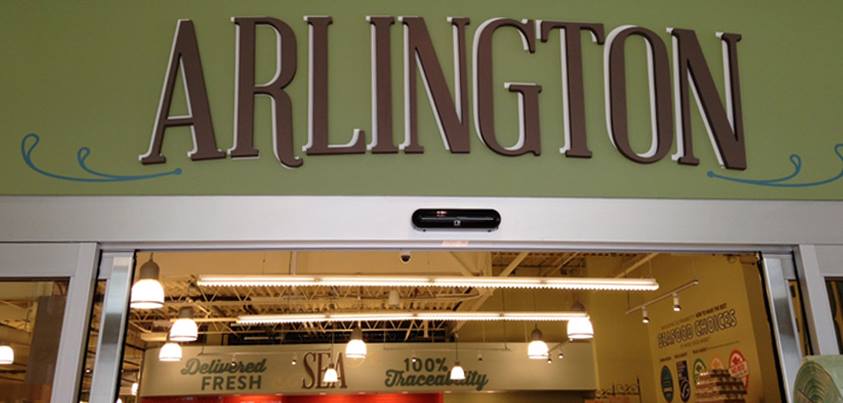
The big news in our town is that a Whole Foods is opening around the corner tomorrow.

This event has generated mainly two reactions. The first was dismay at the closing of the original grocery store, part of a depressing and yet oddly comforting local chain called Johnny’s Foodmaster. The stores reminded me of at store where my Granny might have shopped. You could definitely find Crisco there, and Christmas napkins for cheap.

The real outrage came from some people at the idea of Whole Foods coming in – old people wouldn’t know how to shop there, it caters to the rich, the town soon wouldn’t be recognizable. An outright class war was brewing, a partisan brouhaha as bad as when Carol Band proposed banning leaf blowers in the summertime.

The other reaction was excitement, which if you think about it is equally outsized. Yet people have been talking about it, and tonight two of my neighbors called to ask if I wanted to go by tomorrow, on opening day. I said yes, even though I already go to a Whole Foods nearby and I tell myself it is mainly to buy olive oil – which, at Whole Foods, is cheap.

Of course Whole Foods has worked to generate this excitement. Communicative and cheerful during construction, they used the wait to create a buzz about being Arlington’s locally sourced grocery store. The papered over windows were plastered with descriptions of local businesses in working class towns who would be involved – the bakery in Medford, the fishmonger in Gloucester, the distributor in Everett.

So tonight I walked the dogs over, just to see.

I found a sparkling new grocery store, all ready to go. It’s beautifully designed with pretty colors, stenciled signs over the deli and seafood, and a seating area in front with butcher block tables and retro metal chairs enameled in a ‘fifties pistachio green. Pumpkins and chrysanthemums lined the sidewalk outside the front door just to remind us it’s a grocery store like any other in New England this time of year. Chalkboard signboards with the latest sales and specials drawn on stood ready to put out, along with one that said “Whole Foods: Now Open!”

The whole effect was endearing – like the kids had gotten everything ready for the big production tomorrow. It was also filled with little messages that could definitely provoke disdain. Scrawled on the wall above the seafood were the words “100% Traceable”. At the front of the pretty produce I could see a sign for “eco-apples” – apples that hadn’t been treated with pesticides. Small carousels of reusable grocery bags topped the registers.

But they pulled it off, design-wise, without it looking like a Whole Foods. It kind of looks like a cheerier Johnny’s. Very clever.

A young policeman came walking up from the parking lot. I assumed he was there to protect the pumpkins.

“I’m just looking,” I said.

“Oh, no,” he said. “I was just wondering what time they were opening tomorrow.”

He peered in the window.

“Aw, it looks nice in there.”

After we compared notes on Stop N Shop (“They’re awful,” he said. “So expensive. And you never know where their stuff is coming from.”) I had to wonder about this grocery store class divide and whether Whole Foods might be aiming to change it.

Whenever I find myself starting to be impressed by a corporation, I imagine a rich guy with a cigar in his mouth and his feet on the desk laughing that I fell for the chalkboard signs and the eco-apples.

I know many environmental activists who call any corporate efforts on this front “greenwashing”. And I don’t want to know all the people who have to eat quinoa. But there is power in purchasing and marketing basic ideas of sustainability, and being places where these products and values can become normalized. (I do wonder about all the stuff they sell, but that is another post.)

This Whole Foods, like others popping up in the area, is small for a grocery store these days. They kept the Johnny’s footprint – didn’t try to make it enormous or reject the in-town location because it couldn’t be made bigger. They’re bringing us eco-apples as if we asked for them, and maybe someone who never thought about pesticides might begin to (as long as the apples don’t look wormy, which I couldn’t verify from squinting in the window).

One of my neighbors is just hoping there will be a cookie bar.